
RAFIC Digital Resource Center
Dar es Salaam Institute of Technology
Issue, return, secure and audit the collection with UHF RFID — live from any device.
See how the RFID automation works↓Dar es Salaam Institute of Technology
Issue, return, secure and audit the collection with UHF RFID — live from any device.
See how the RFID automation works↓UHF RFID reads many tags at once, from a distance, without line of sight — so issuing, returning, securing and counting books all happen automatically.
A UHF RFID label goes inside the cover. The RFID printer encodes the tag and prints the spine label in one pass; the desk reader or the handheld binds the tag to the book record — no barcode scanning, ever again.
Each member gets an RFID card. Tapping it at any station identifies the member instantly, shows their loans, fines and limits, and opens the entrance barrier.
The member taps the card, places a stack of books on the reader pad — all tags are read at once in under a second — reviews the list and borrows them with one touch. No librarian needed.
Books dropped on the return pad are identified, matched to the borrower, checked in, and any overdue fine is calculated — 24 × 7, even when the desk is closed.
UHF gates at the exit read every tag passing through. Issued books pass silently; a book that was not checked out triggers an alarm and a live alert with the title and the time.
A librarian walks the shelves with the handheld reader; it reads hundreds of tags a minute. Stock-take of the whole library takes hours instead of weeks, and misplaced books are found by signal strength.
About 10 seconds for a stack of five books — around ten times faster than scanning barcodes one by one.

Reads a whole stack of books and the member card on its pad. Connects to the tablet by Bluetooth / USB, or straight to the server over Ethernet.
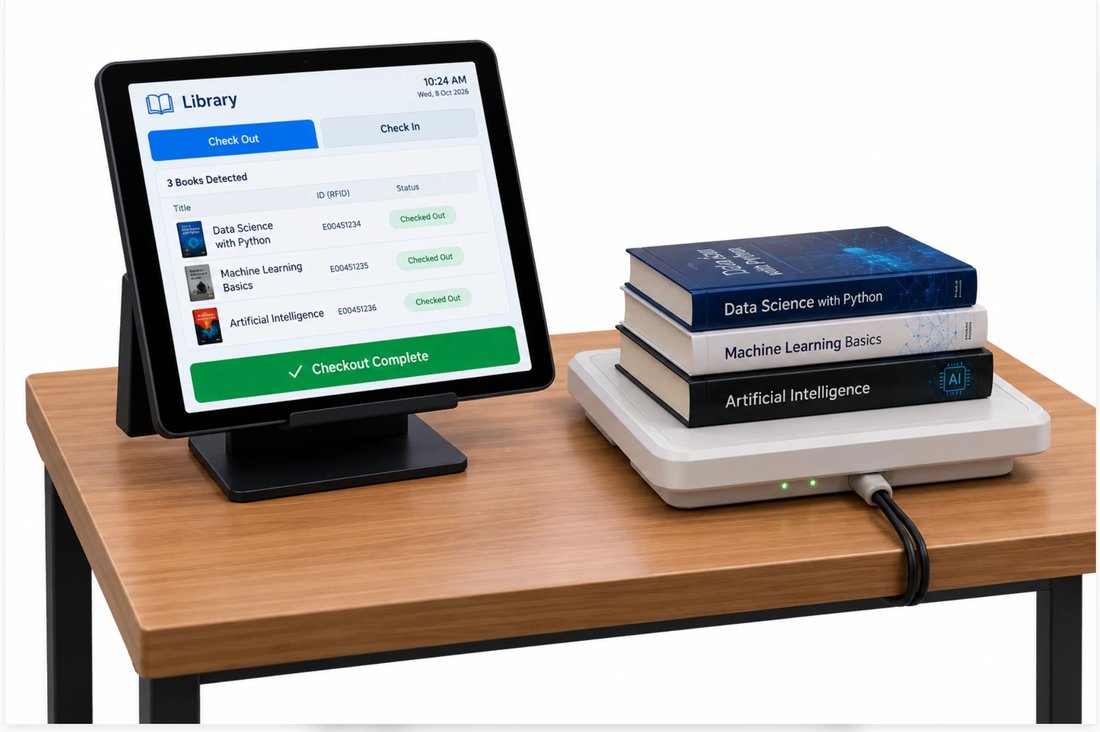
An Android tablet running the RAFIC kiosk app, with a reader pad in front. Each tablet signs in with its own kiosk login and opens its station screen.
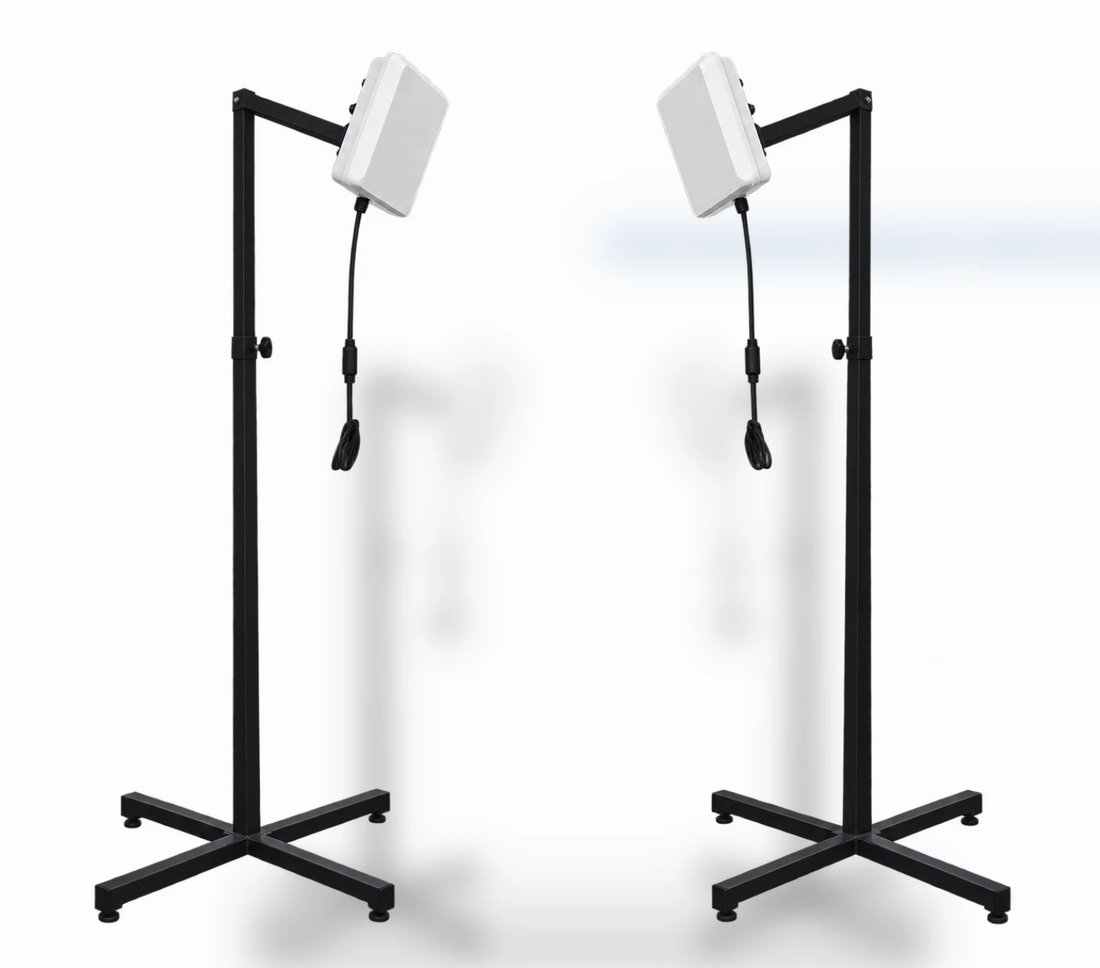
Reads tags on both sides of the doorway and reports every pass to the server in real time over the LAN.
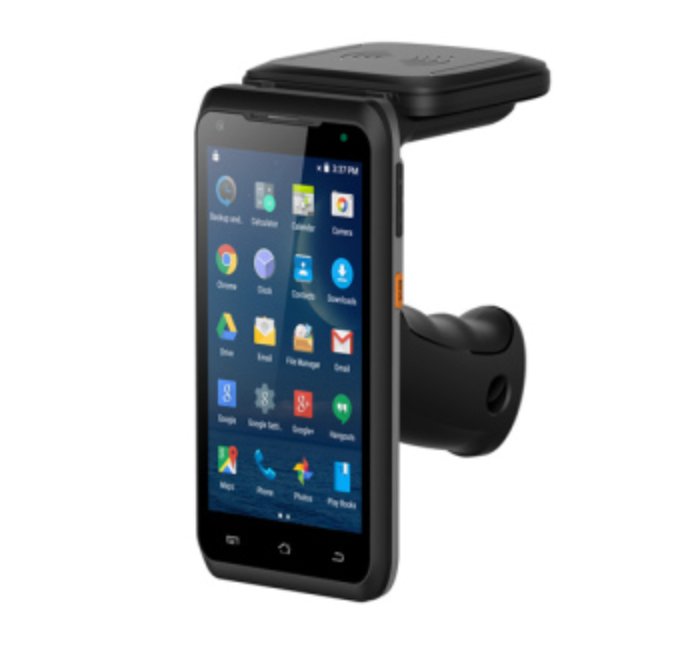
Stock-take, shelf audit, finding mis-shelved books, and binding tags to books on the floor — synced to the server over Wi-Fi.
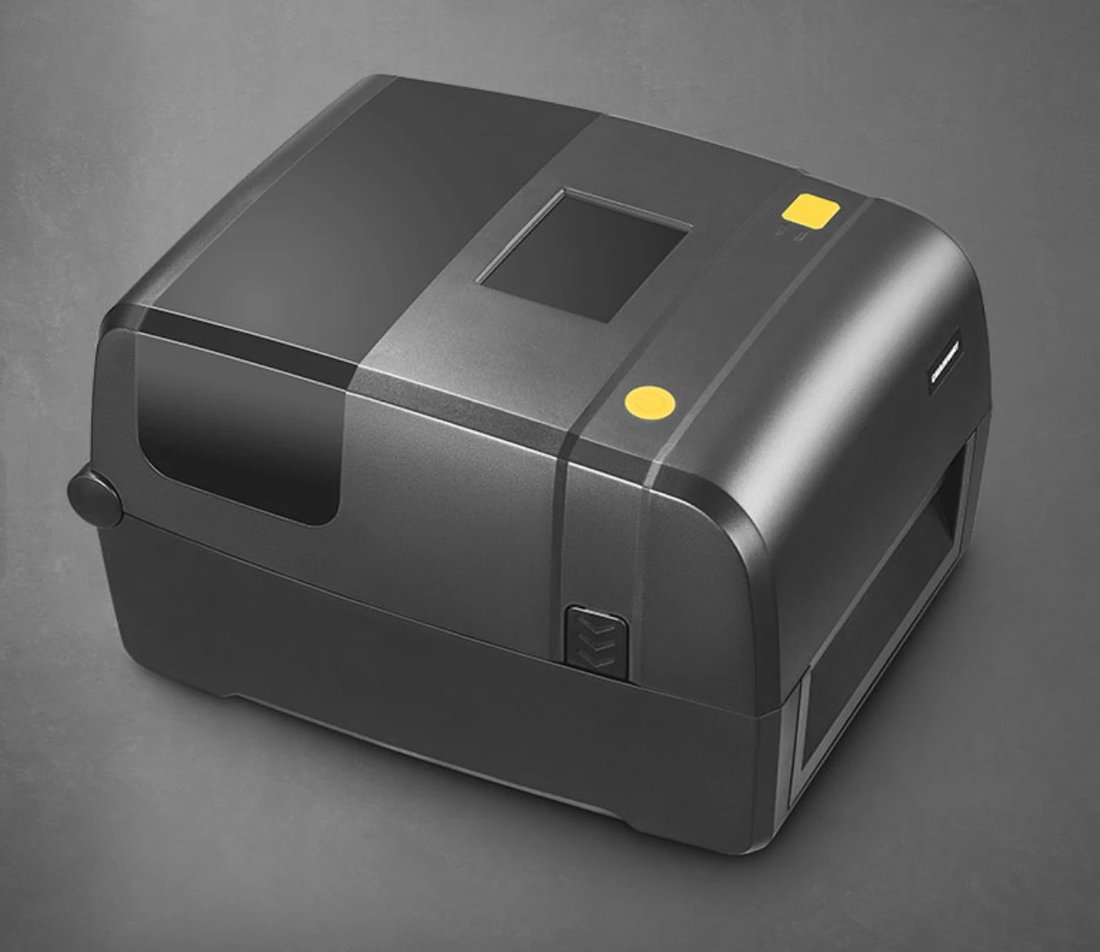
Encodes the UHF chip and prints the book label in a single pass when new books are catalogued.